Oral Minoxidil for Hair Loss: What to Know


- Oral minoxidil is a systemic approach to hair loss treatment, using much lower doses than the original cardiac indication from which the medication emerged
- Originally developed as a blood pressure medication at doses of 10 to 40 milligrams daily, minoxidil is now being studied and prescribed for hair loss at 0.625 to 5 milligrams per day
- Clinical evidence from recent years, including a 2022 review in the Journal of the American Academy of Dermatology, demonstrates strong efficacy for hair regrowth with low-dose oral minoxidil
- Oral minoxidil appeals to men seeking to avoid topical application hassles and women with certain patterns of hair loss who show superior response to systemic treatment
Quick Answers:
- How does oral minoxidil work for hair loss? It opens potassium channels in hair follicles, prolongs the growth phase of hair, and increases blood flow to follicles, promoting thicker, longer hair growth.
- What dose of oral minoxidil is used for hair loss? Most clinical trials use 2.5 milligrams daily for women and 5 milligrams daily for men, though some prescribers start lower and titrate upward.
- Is oral minoxidil more effective than topical minoxidil? Oral minoxidil avoids scalp application issues and may achieve better distribution, but head-to-head data showing superiority remains limited.
- What is the most common side effect of oral minoxidil? Hypertrichosis, or increased body hair growth, occurs in most people taking the medication and is the primary tolerability concern.
- How quickly does oral minoxidil work for hair loss? Most people require three to six months of consistent use to notice visible improvement, with peak results often at six to twelve months.

The Mechanism and Evolution of Low-Dose Oral Minoxidil
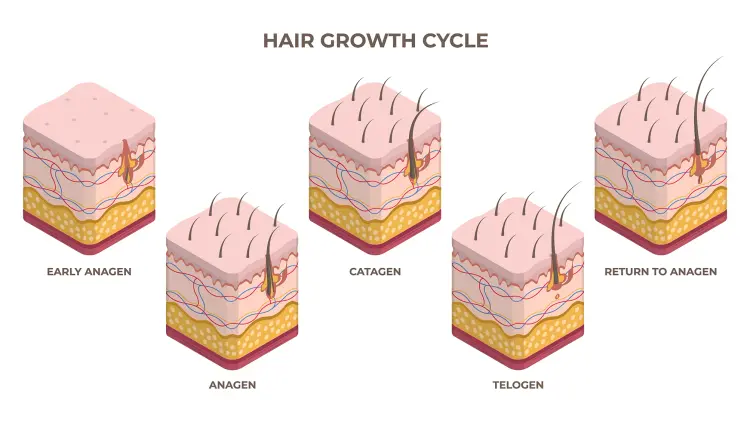
Minoxidil is a vasodilator, a medication that relaxes blood vessel smooth muscle and increases blood flow. Its mechanism in hair loss treatment involves multiple pathways beyond simple vasodilation. The drug opens adenosine triphosphate-sensitive potassium channels in dermal papilla cells of hair follicles, which stimulates gene expression associated with cell growth and hair elongation. Additionally, minoxidil prolongs the anagen, or growth phase, of the hair cycle, keeping hairs in their active growth phase longer before shedding. Finally, by increasing blood flow to the scalp and hair follicles, minoxidil ensures that follicles receive adequate oxygen and nutrients to support robust hair growth. Minoxidil was originally approved by the FDA as an oral medication for severe hypertension at doses of 10 to 40 milligrams daily. Physicians noticed that patients taking the medication for blood pressure control developed hypertrichosis, increased body hair growth, as a side effect. This observation led to investigation of minoxidil for hair loss treatment, first as a topical application, which was FDA-approved in 1988. However, topical minoxidil has limitations: it requires consistent scalp application, can be greasy or leave residue, and some people find compliance challenging. Recent clinical interest in low-dose oral minoxidil stems from attempts to achieve hair growth benefits while using doses far below the original cardiac indications, theoretically reducing blood pressure and systemic side effect risks. Current prescribing for hair loss typically involves 0.625 to 5 milligrams daily, about one-tenth to one-hundredth the dose used for hypertension.
Clinical Evidence for Low-Dose Efficacy
The most comprehensive recent evidence comes from a 2022 literature review in the Journal of the American Academy of Dermatology synthesizing findings from multiple trials of low-dose oral minoxidil. The review found strong evidence supporting efficacy for androgenetic alopecia at doses of 2.5 to 5 milligrams daily. In a notable 2021 study published in Dermatologic Therapy, men and women taking 5 milligrams of oral minoxidil daily for six months showed statistically significant increases in hair count and hair diameter compared to baseline, with improvements evident in most participants by month four. Women in the study appeared to show particularly strong response, with notable regrowth on the crown and improvement in diffuse shedding patterns. Another 2020 study specifically examining 2.5 milligrams daily in women with female pattern alopecia found significant improvement in hair density and reduction in shedding. The response appears consistent across different types of hair loss, though androgenetic alopecia shows the clearest benefit. Importantly, the clinical trials that drove FDA approval of topical minoxidil in the late 1980s established that 5 to 10 percent of users experience hair regrowth and 40 to 50 percent experience slowing of hair loss. The efficacy rates reported in low-dose oral minoxidil studies suggest similar or potentially superior outcomes. Longitudinal follow-up data remains somewhat limited for oral minoxidil, particularly regarding durability of benefits beyond 12 months with continued use, but early evidence suggests sustained benefit as long as the medication continues.


Side Effects and Safety Monitoring Needs
Hypertrichosis, increased hair growth on the body, is the most common side effect of oral minoxidil, occurring in the majority of people taking the medication. This manifests as darker, coarser hair growth on the face, arms, legs, and sometimes back or other areas. Some users find this socially acceptable or manageable with hair removal methods like shaving, waxing, or electrolysis. Others find it unacceptable and discontinue the medication. The hypertrichosis typically reverses within weeks to months after stopping oral minoxidil, though the timeline for hair regression varies. Fluid retention is another common side effect, occurring in some users as mild swelling in the ankles, face, or hands, or as a sensation of general puffiness. This side effect typically appears within the first weeks of treatment and may improve as the body adjusts. Hypotension, or low blood pressure, can occur with oral minoxidil, particularly in the early weeks of treatment or when doses are increased. Some people experience dizziness, lightheadedness, or fatigue. Blood pressure monitoring is advisable when starting oral minoxidil, particularly in people with baseline hypotension. Less common but serious side effects include exacerbation of heart conditions, though at the doses used for hair loss this appears rare. Pericardial effusion, fluid accumulation around the heart, was reported with the high-dose oral minoxidil used for hypertension but has not been reported at the low doses for hair loss. Men with cardiac risk factors or existing heart disease should be cautious and monitored. Oral minoxidil should be avoided in people with coronary artery disease, uncontrolled hypertension, or significant renal impairment. Women of childbearing age should use reliable contraception, as minoxidil is not recommended in pregnancy.
Getting a Prescription and Combination Therapy
Obtaining oral minoxidil requires a prescription from a licensed healthcare provider who understands its use for hair loss. Some dermatologists prescribe it, and increasingly telemedicine platforms specializing in hair loss now offer oral minoxidil prescriptions. Typical starting doses are 0.625 to 1.25 milligrams daily, with titration upward to 2.5 to 5 milligrams over weeks. This gradual approach minimizes side effects. Most prescribers recommend monitoring blood pressure before starting and at regular intervals, typically monthly for the first few months, then every three to six months. Many men achieve superior results combining oral minoxidil with topical finasteride or oral finasteride. Minoxidil addresses hair growth phase and follicle vitality while finasteride addresses the DHT-driven miniaturization process. This combination tackles the problem from both angles. Some practitioners also add low-dose spironolactone, particularly in women or men with hormonal components to their hair loss. Oral minoxidil cost varies but typically ranges from 30 to 60 dollars monthly when purchased through telehealth prescribers. Insurance may cover it if prescribed for hypertension, but hair loss prescriptions are often not covered.
Oral minoxidil represents an evidence-based treatment option for androgenetic alopecia that offers advantages for certain patients, particularly those who struggle with topical application compliance or who show diffuse hair loss patterns favoring systemic treatment. Clinical data from recent years demonstrates efficacy comparable to or potentially exceeding topical minoxidil, with hair regrowth becoming apparent within three to six months and peaking around six to twelve months. The primary tolerability consideration is hypertrichosis, unwanted body hair growth, which most users can manage but some find unacceptable. For motivated patients who can tolerate monitoring and who lack contraindications, oral minoxidil combined with topical or oral finasteride represents a comprehensive approach to addressing both the growth phase and the DHT-driven miniaturization underlying male and female pattern hair loss.

Continue Reading
The latest handpicked blog articles
Check all articles